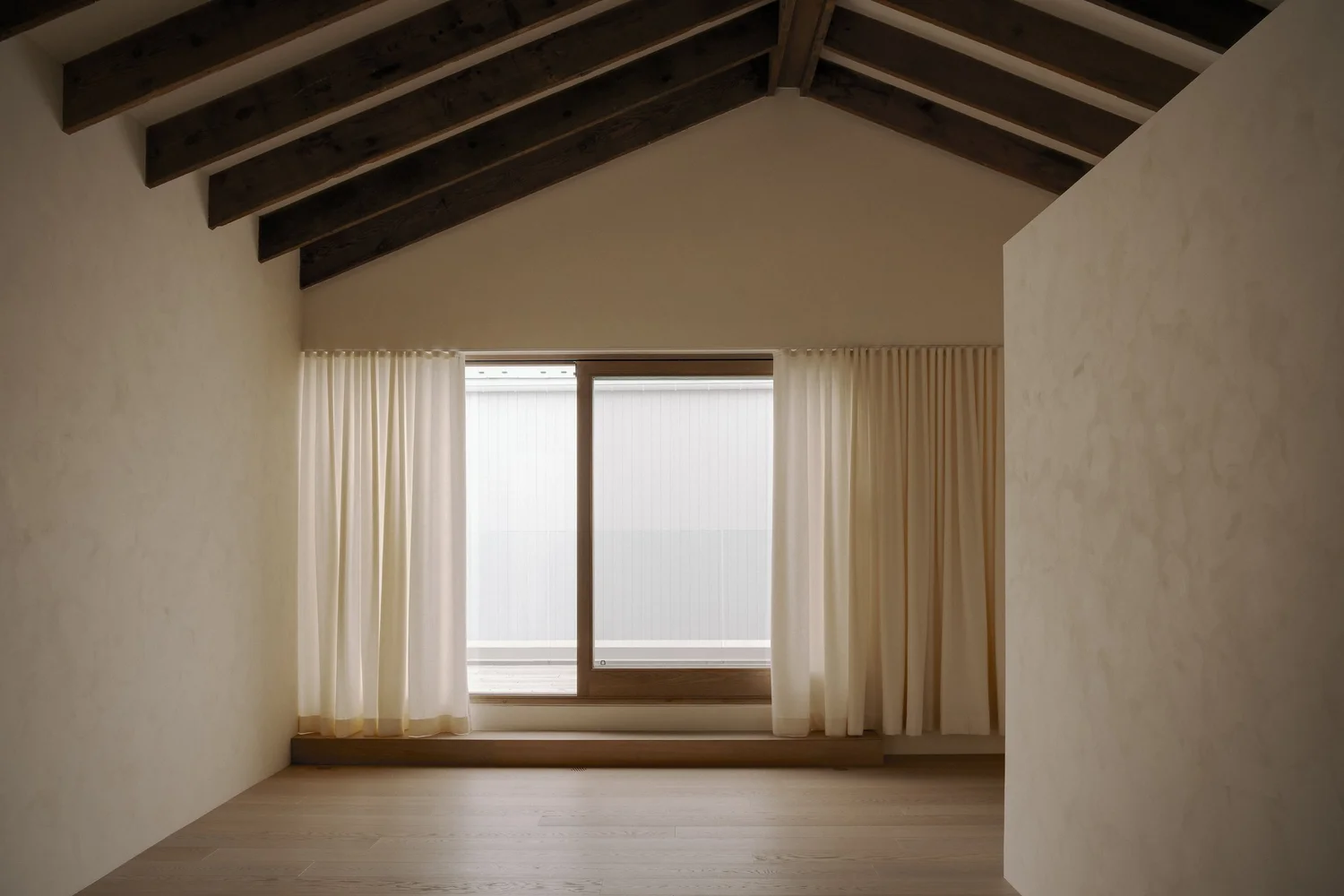
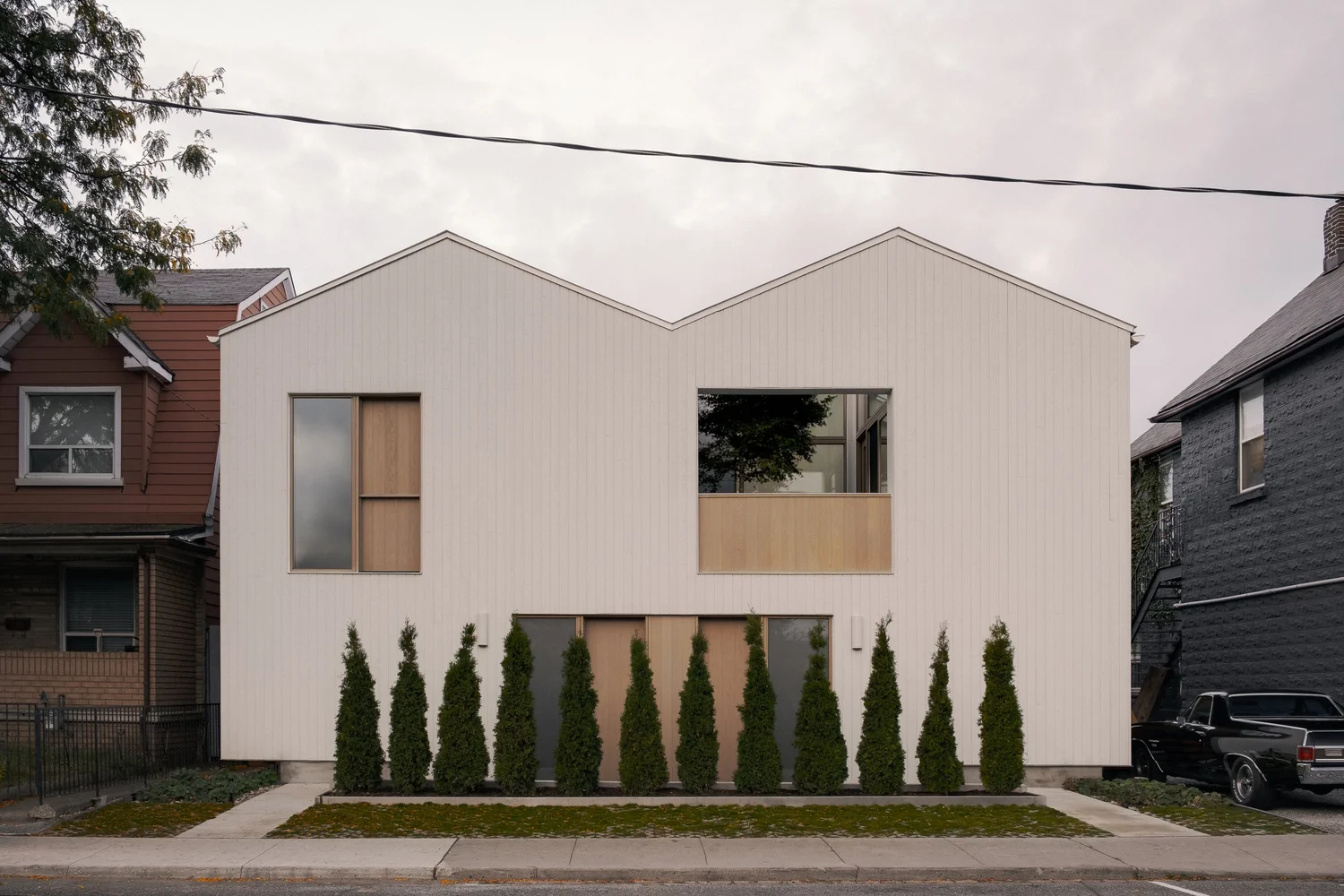
Junction Semi House is a residential adaptive-reuse project designed by Studio for Architecture & Collaboration (StudioAC) in Toronto, Canada. The project transforms a former church structure into a contemporary multi-generational home that accommodates an extended family while preserving the spatial character of the original building. By retaining the existing structural framework and selectively carving out new openings, the architects created a house that balances privacy with shared communal spaces.
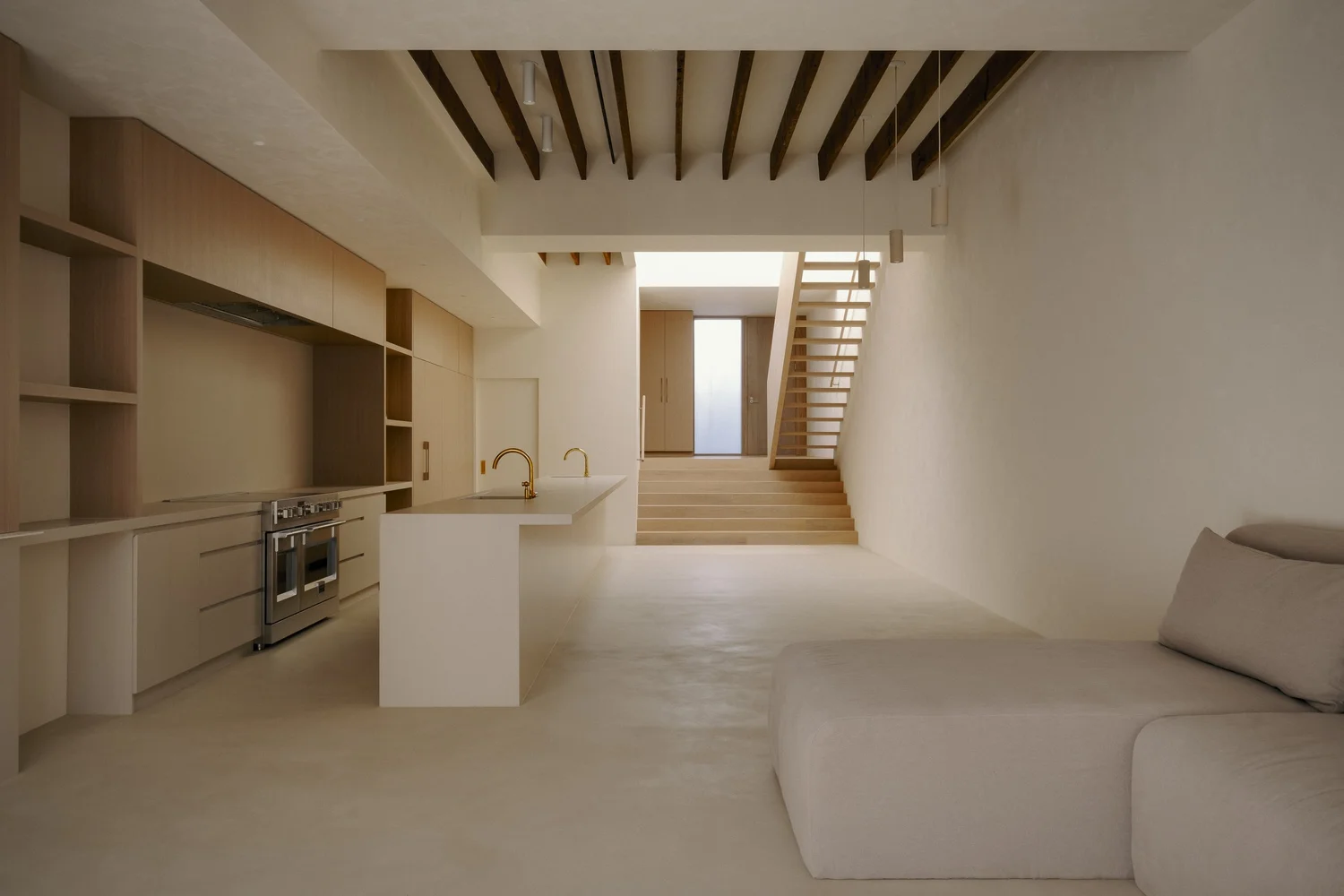
The original building spanned the full depth of the site and offered a robust architectural foundation. Instead of demolishing the structure, StudioAC adopted an adaptive reuse strategy, maintaining the steel frame, exposed timber beams, and brick envelope. The design divides the home into two equal residential units arranged north-south, allowing two generations of the same family to live side-by-side while sharing key outdoor and circulation spaces. Shared elements include the entry sequence, courtyard, terraces, and rooftop garden, creating opportunities for everyday interaction.
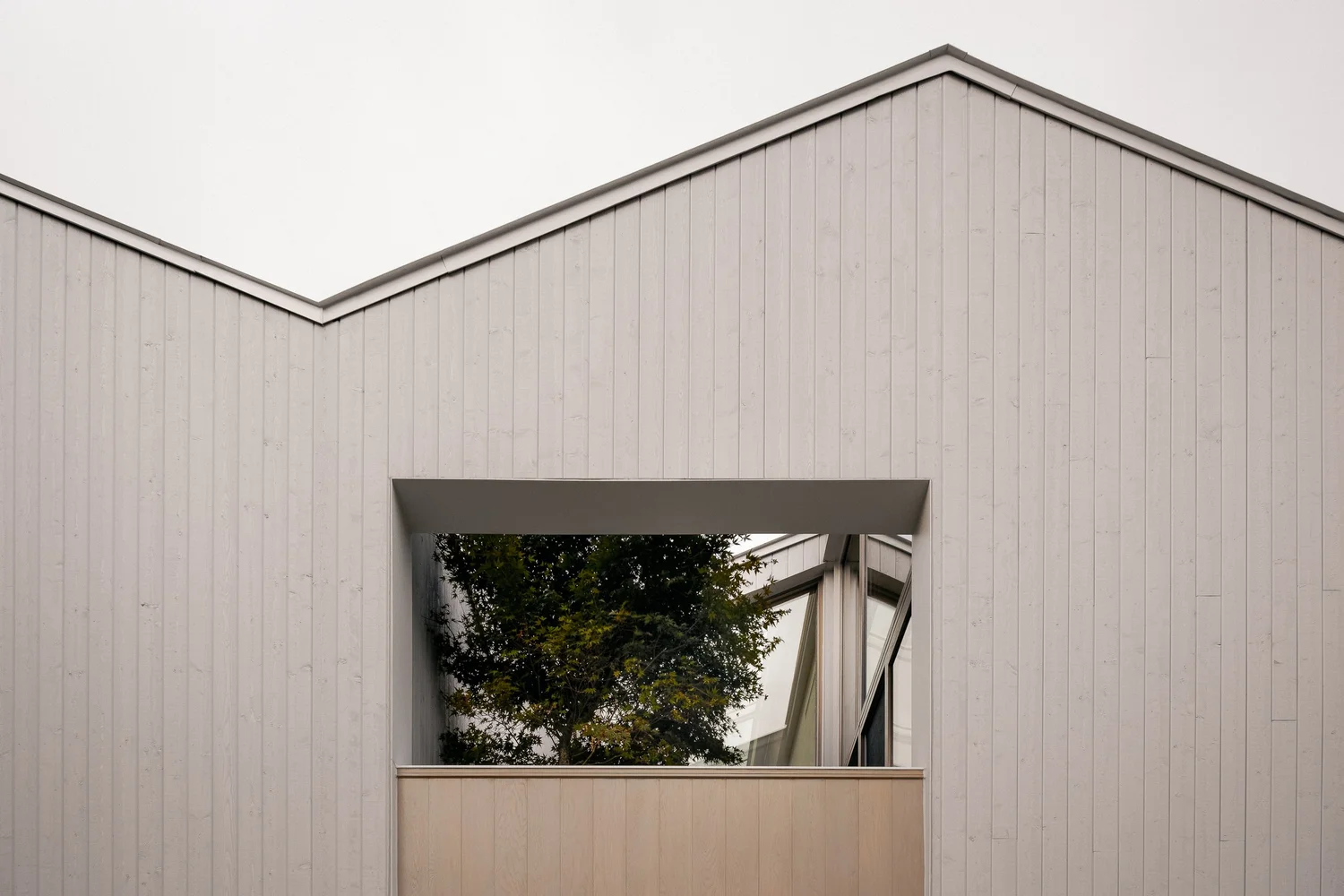
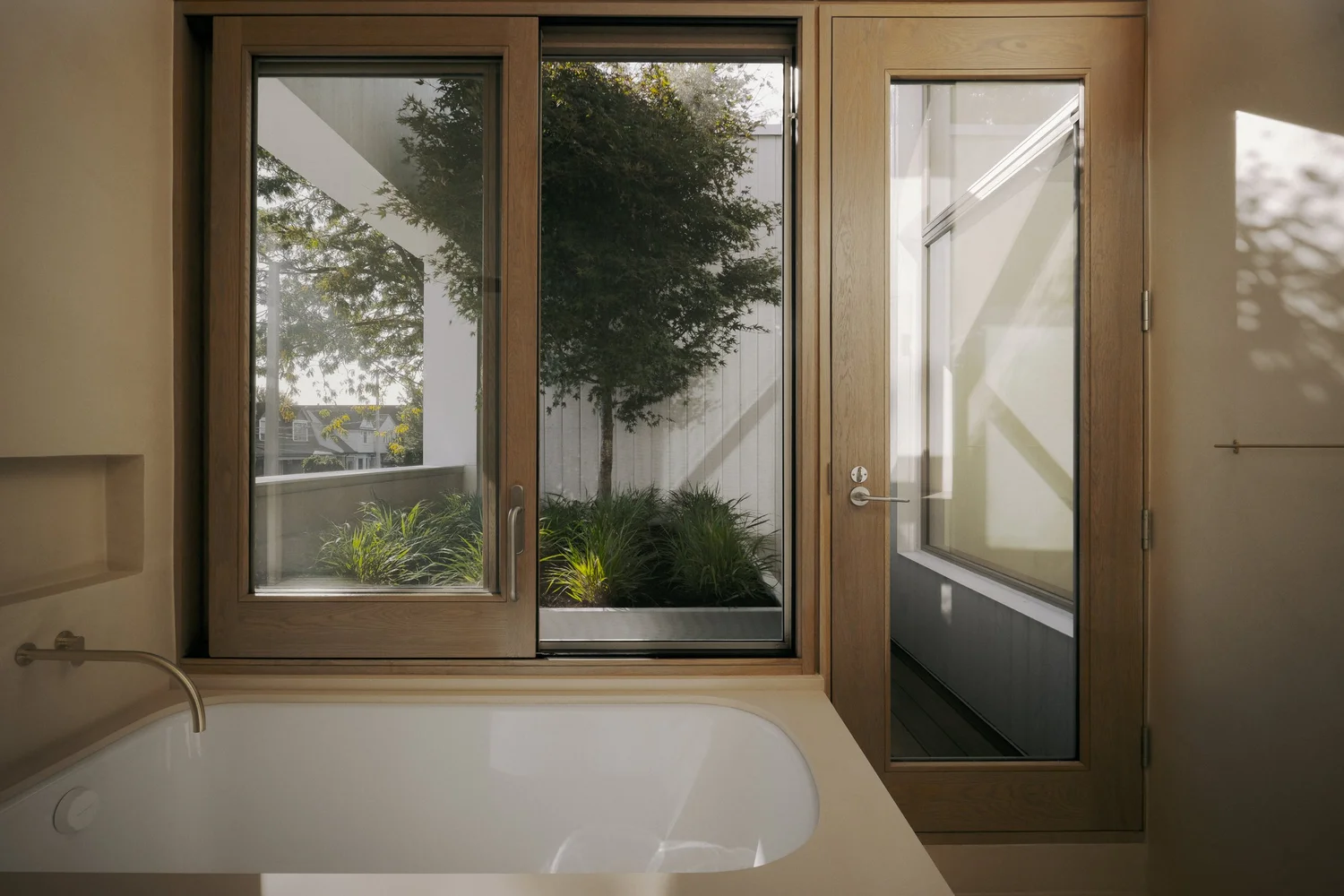
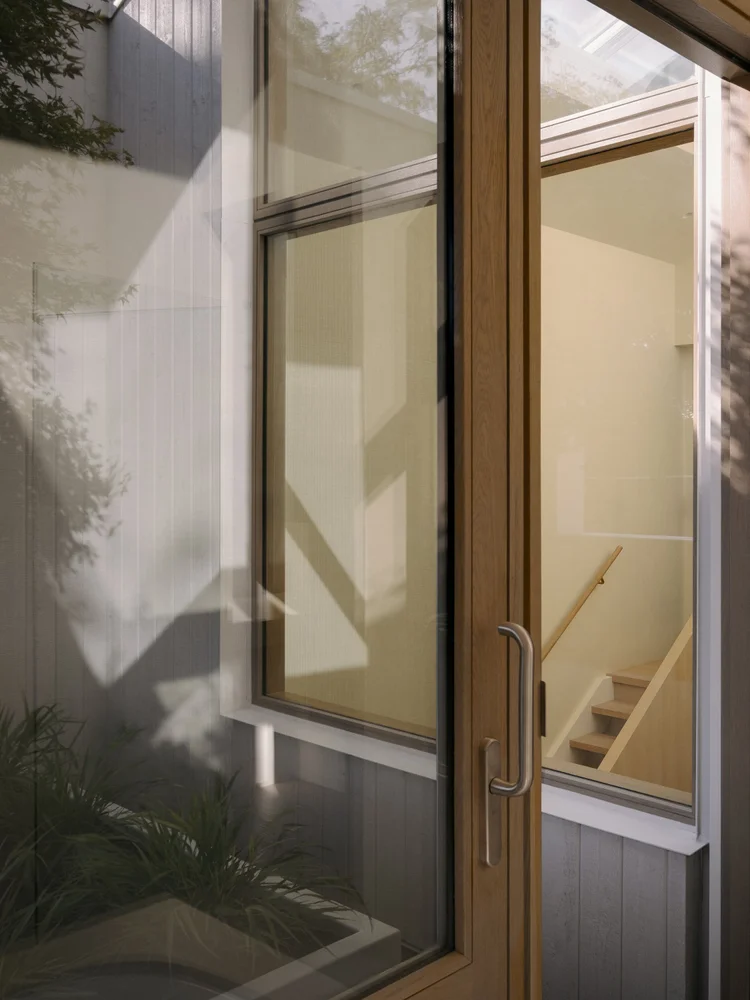
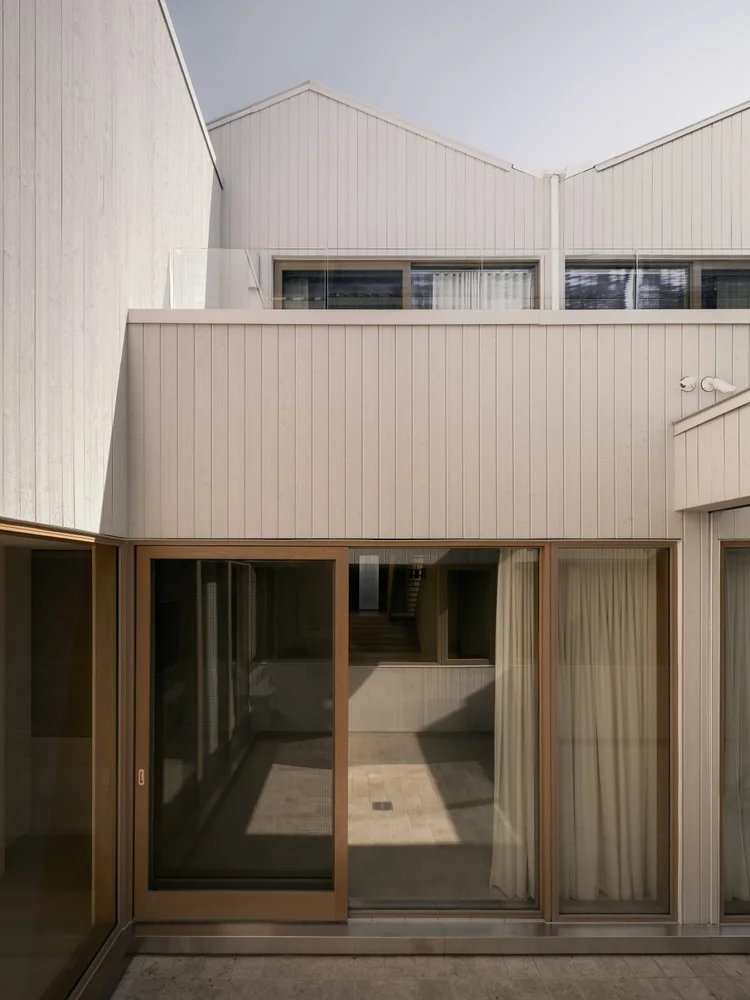
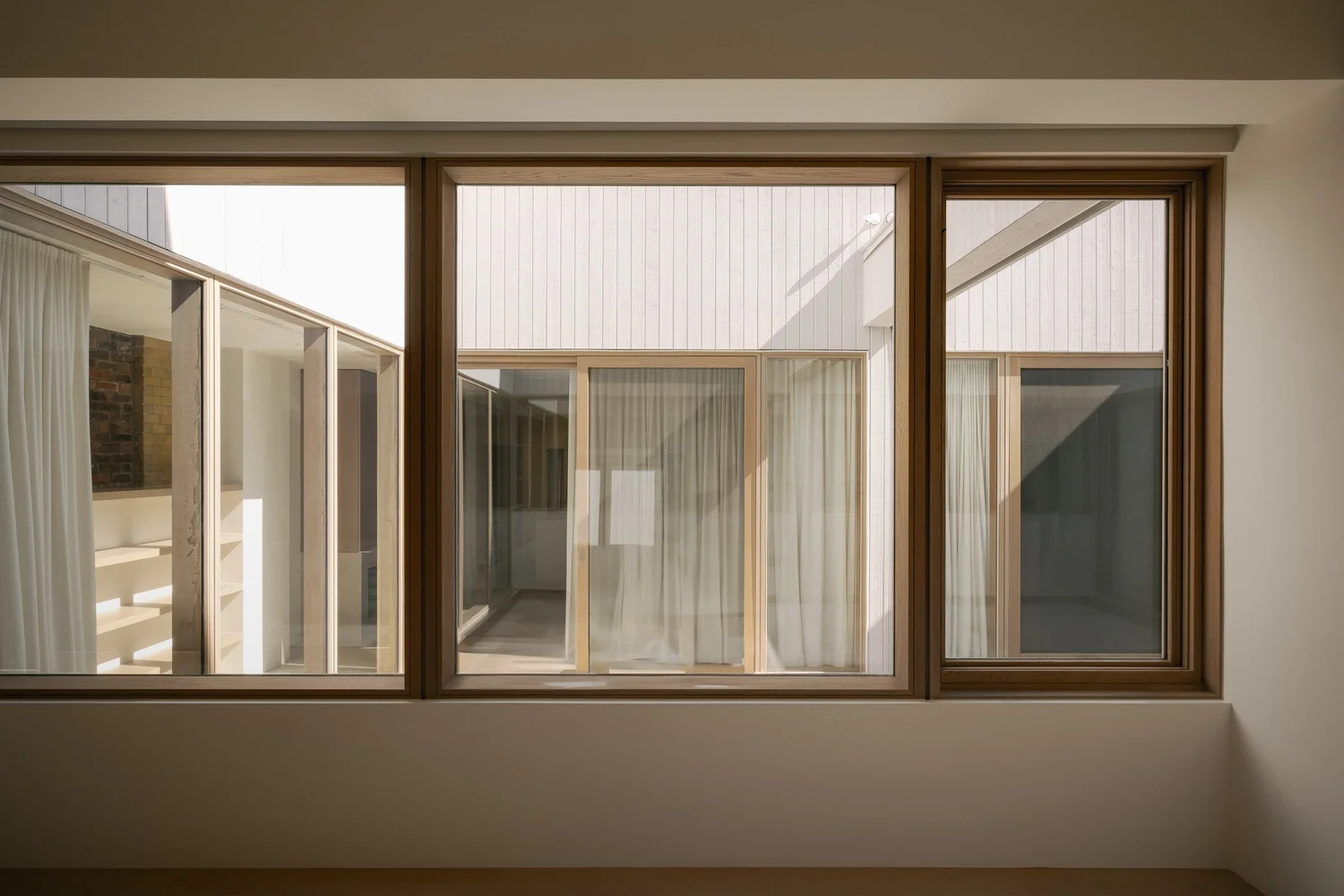
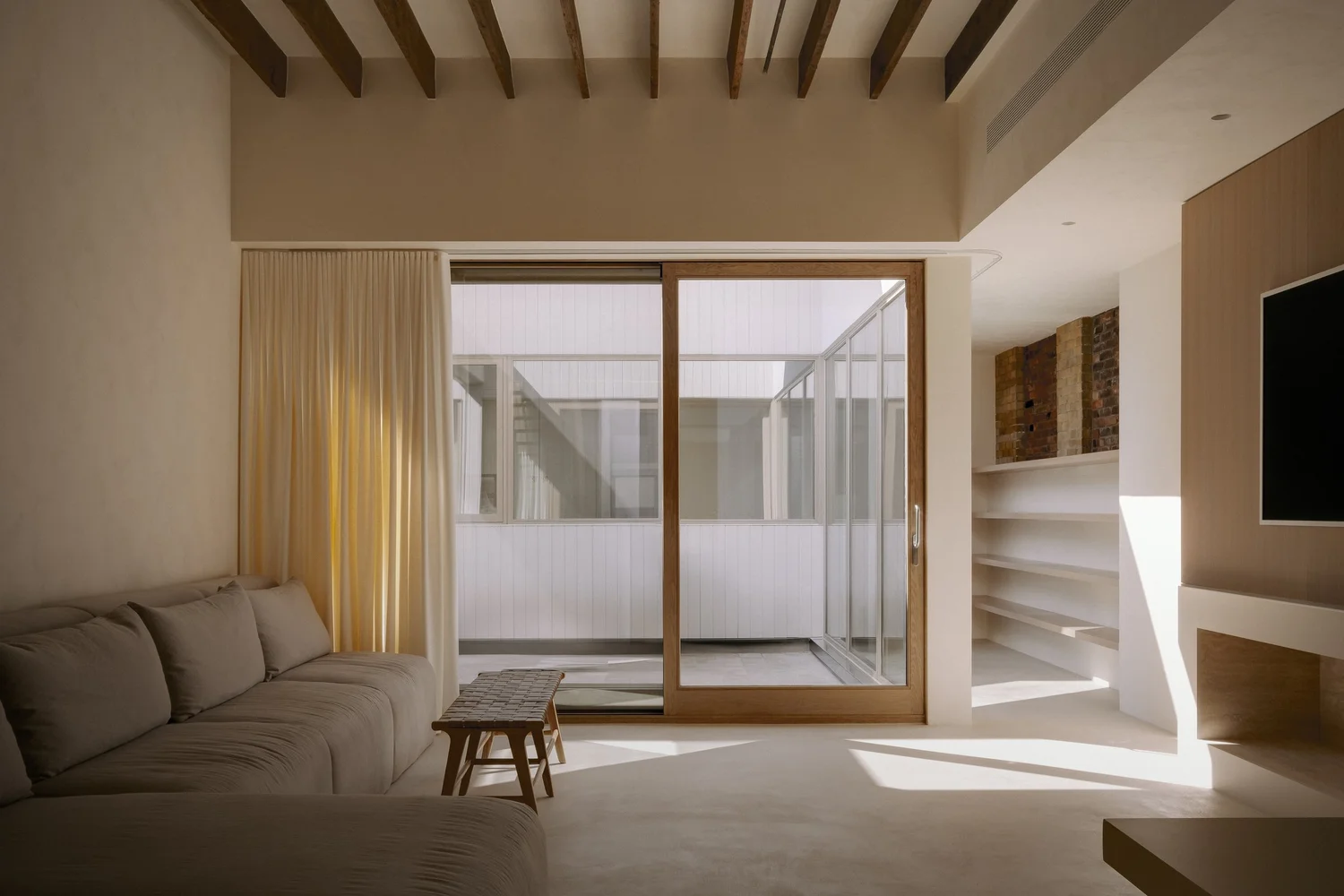
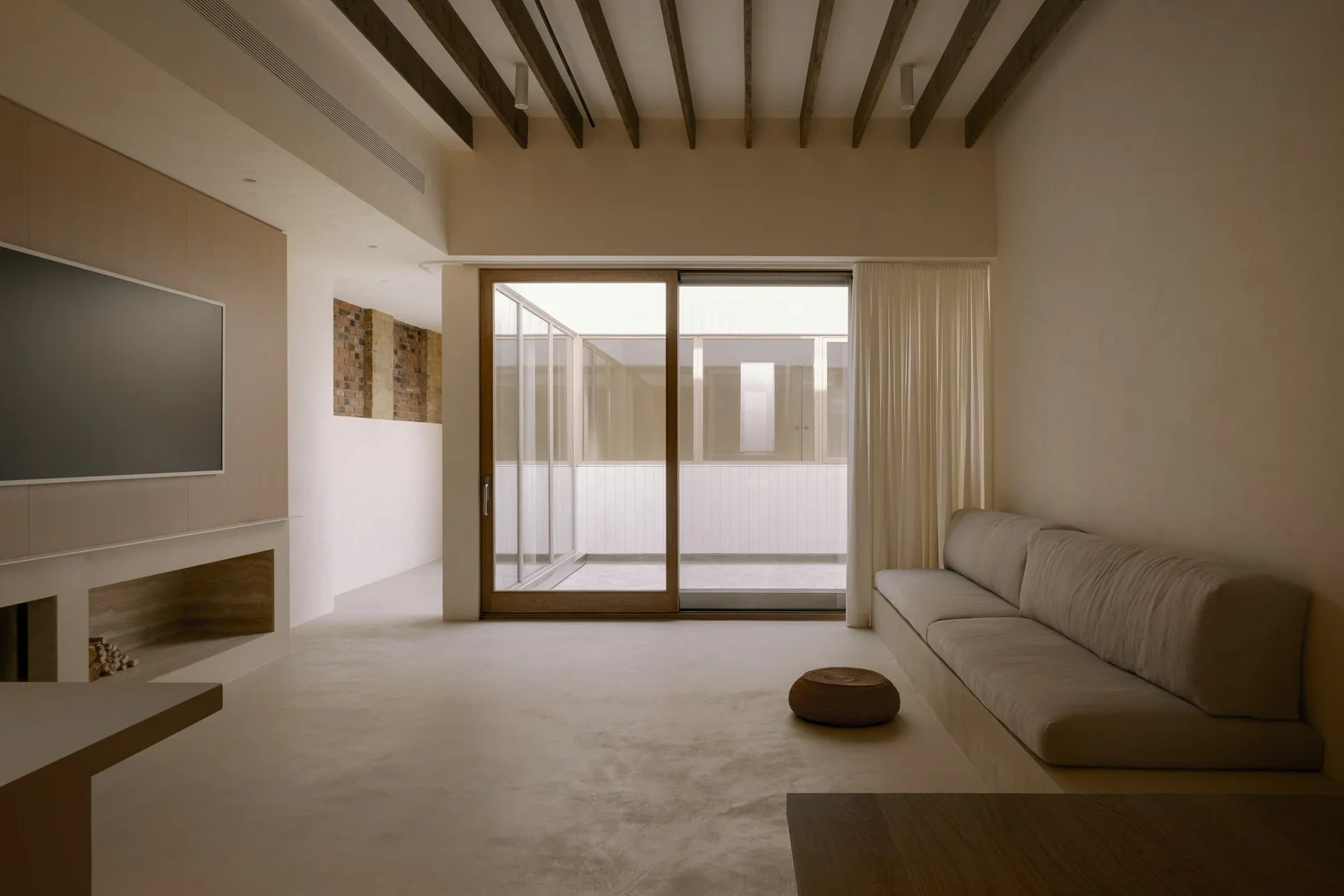
A central courtyard acts as the spatial heart of the house. By removing portions of the original structure, natural light penetrates deep into the building’s interior, creating a bright central zone around which the main living spaces are organized. This courtyard strategy also introduces a calm outdoor environment within the dense urban context of Toronto’s west end. Interior spaces flow around this courtyard and are punctuated by carefully placed openings that frame views of the garden and surrounding terraces.
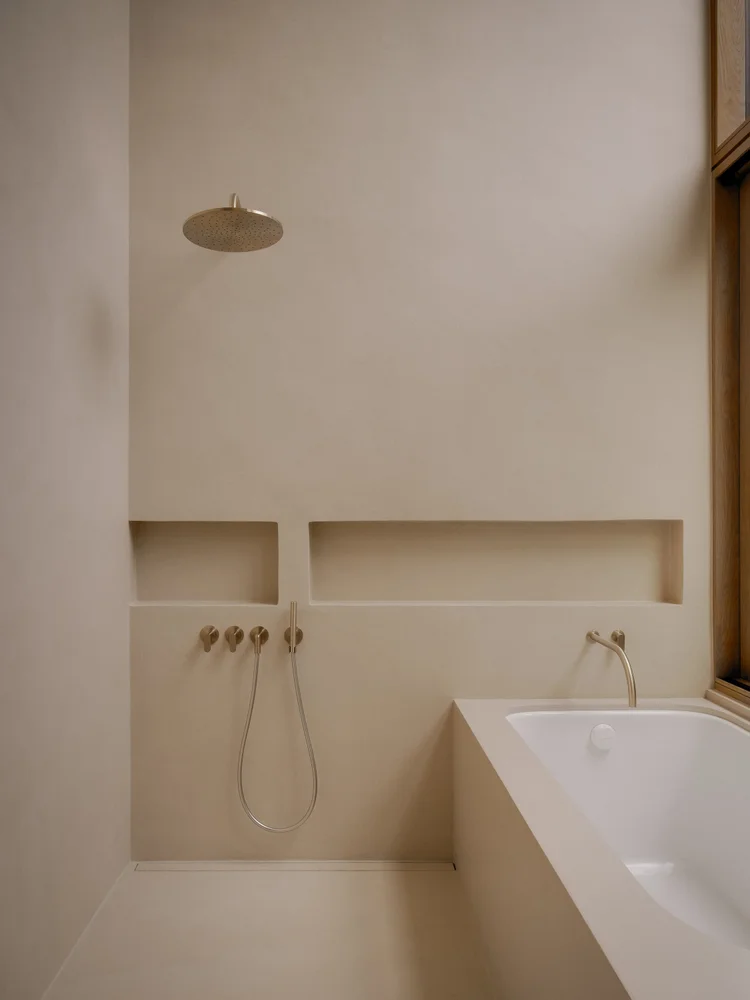
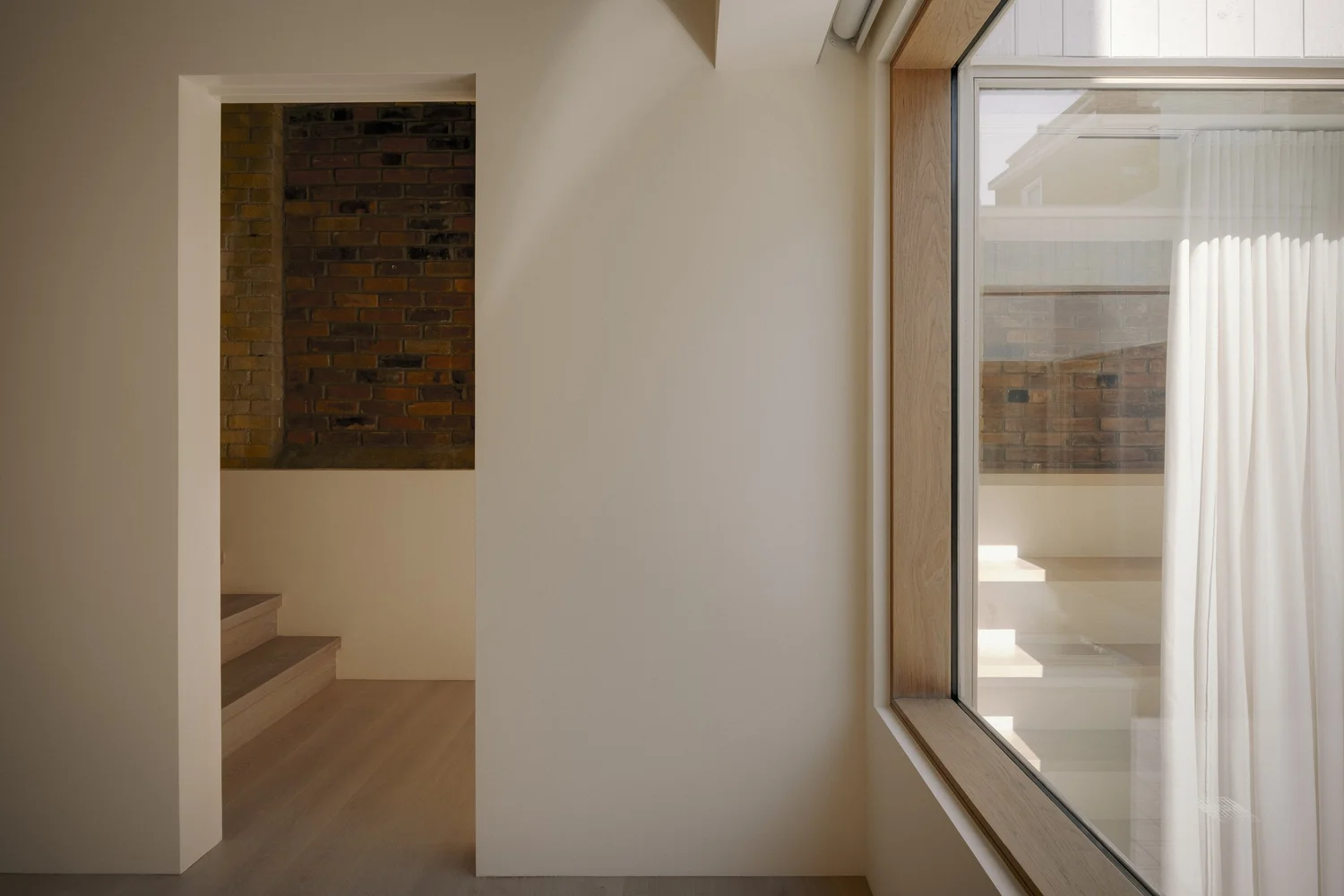
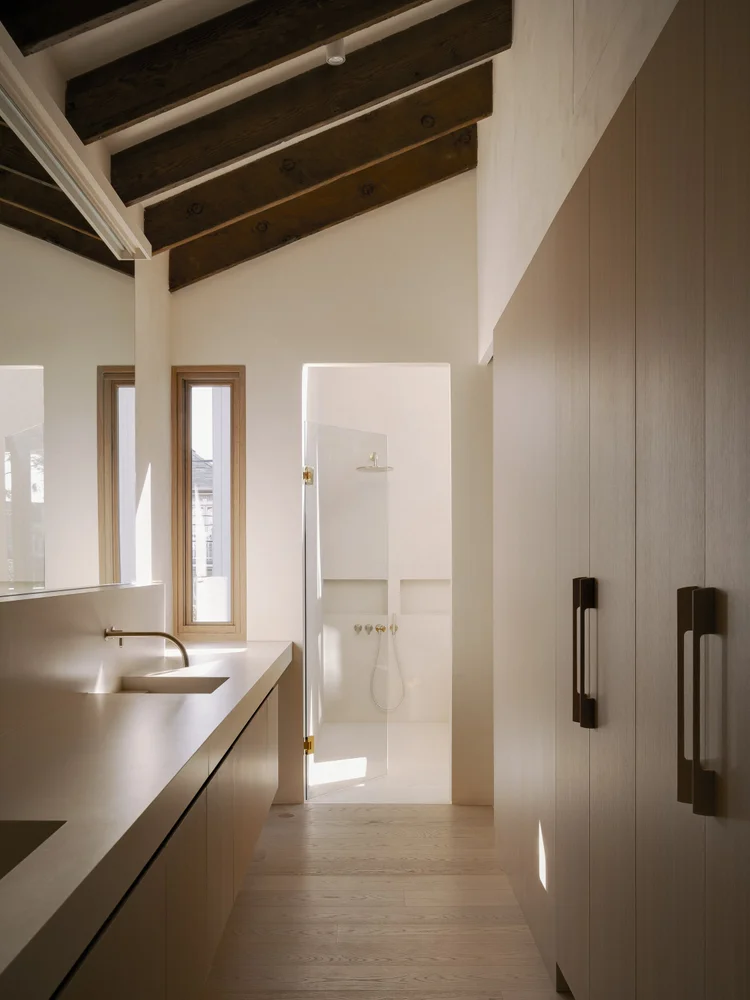
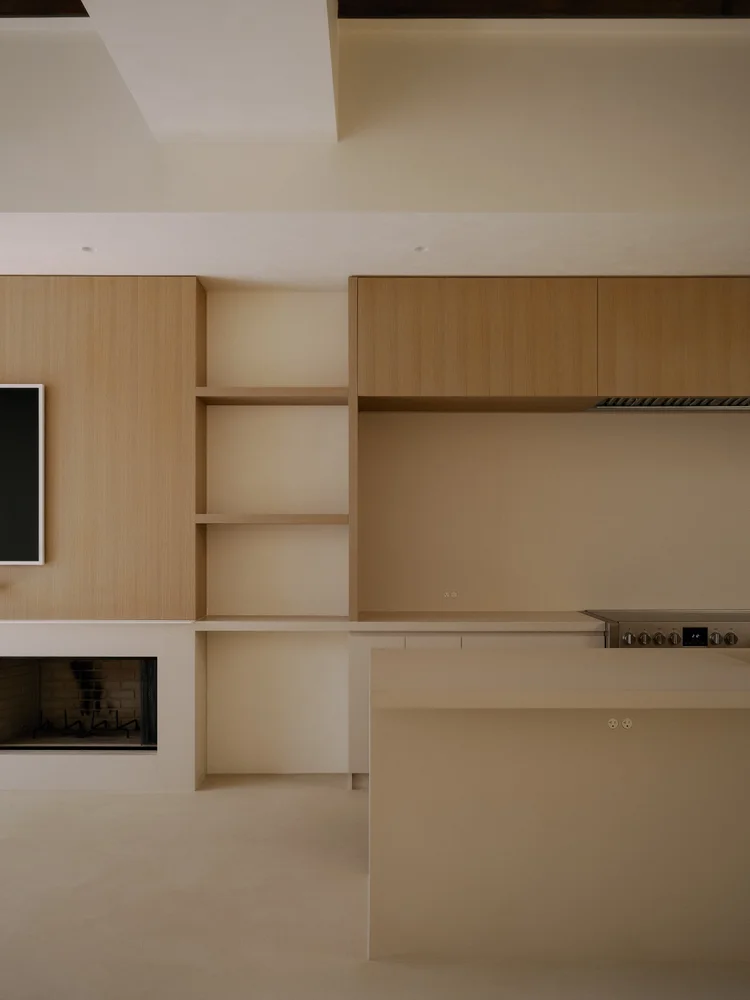
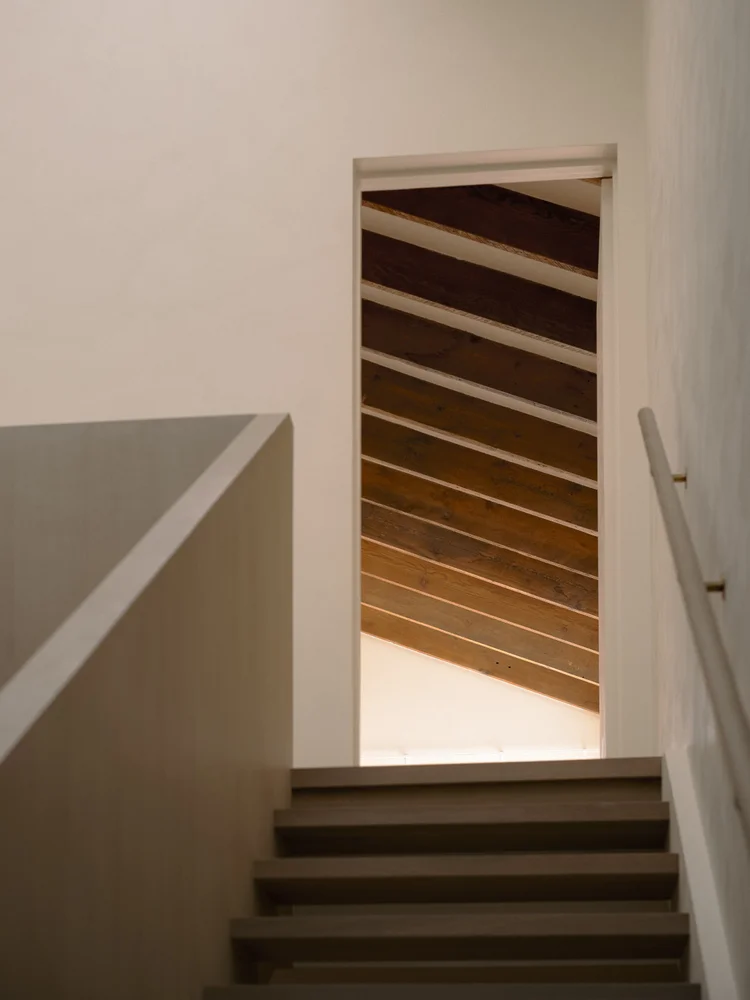
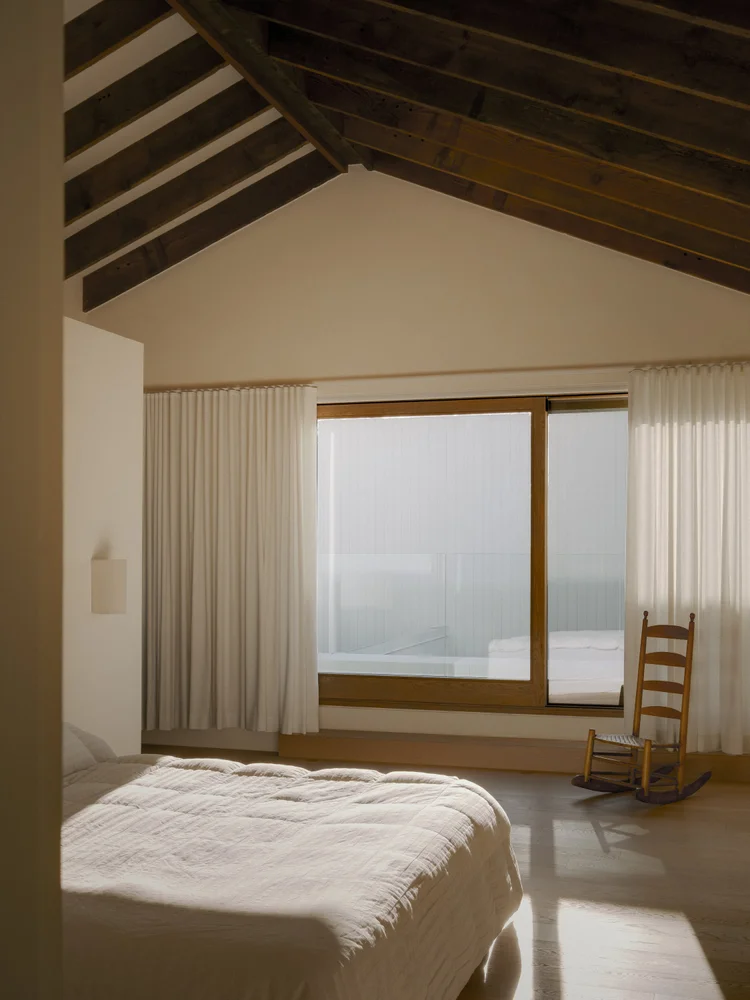
Materiality plays a crucial role in reinforcing the dialogue between the building’s past and present. The palette combines limewash walls, microcement floors, exposed wood beams, and preserved brickwork to create a restrained yet tactile interior environment. Rather than relying on strong colors, the design emphasizes texture, light, and subtle material contrasts. These surfaces reflect daylight throughout the house, amplifying the sense of openness while maintaining a warm residential atmosphere.
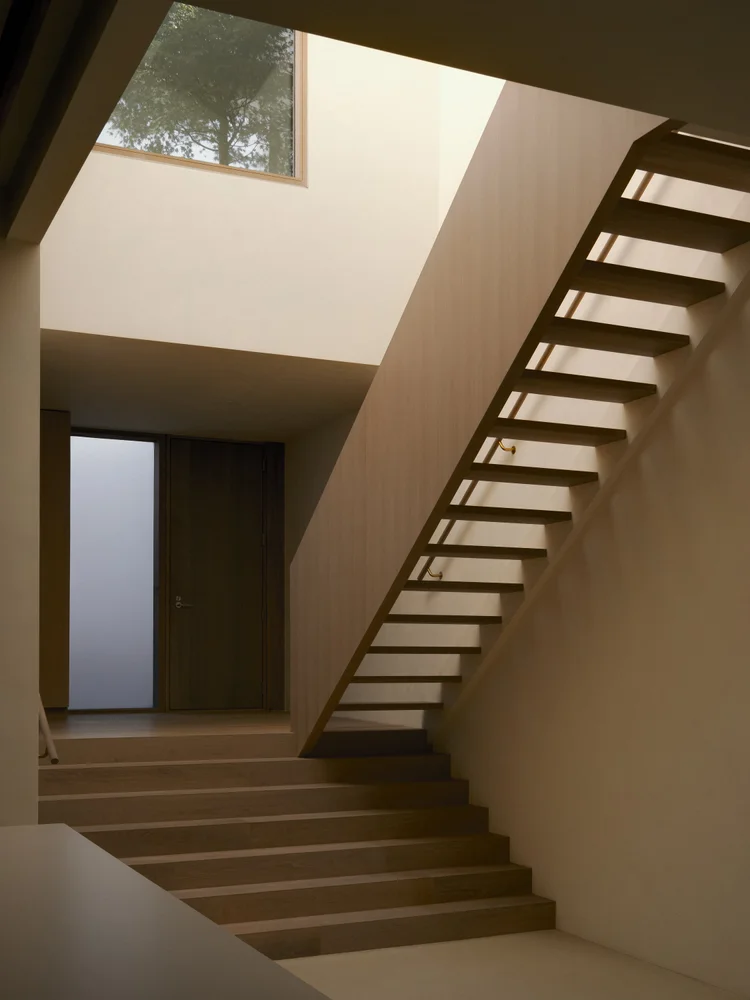
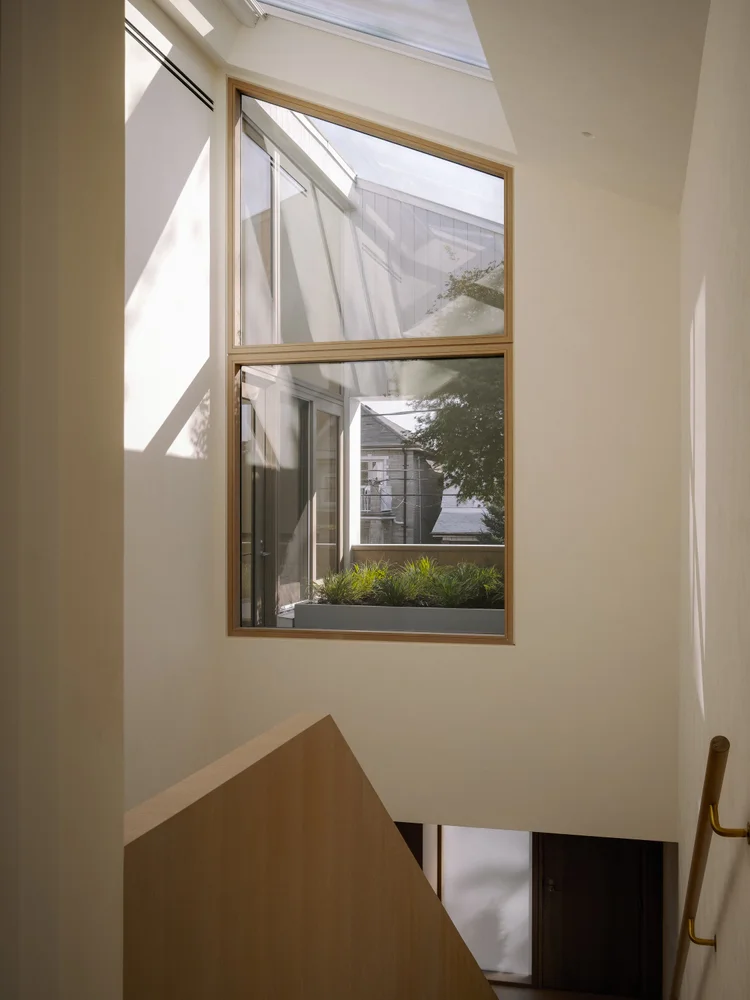
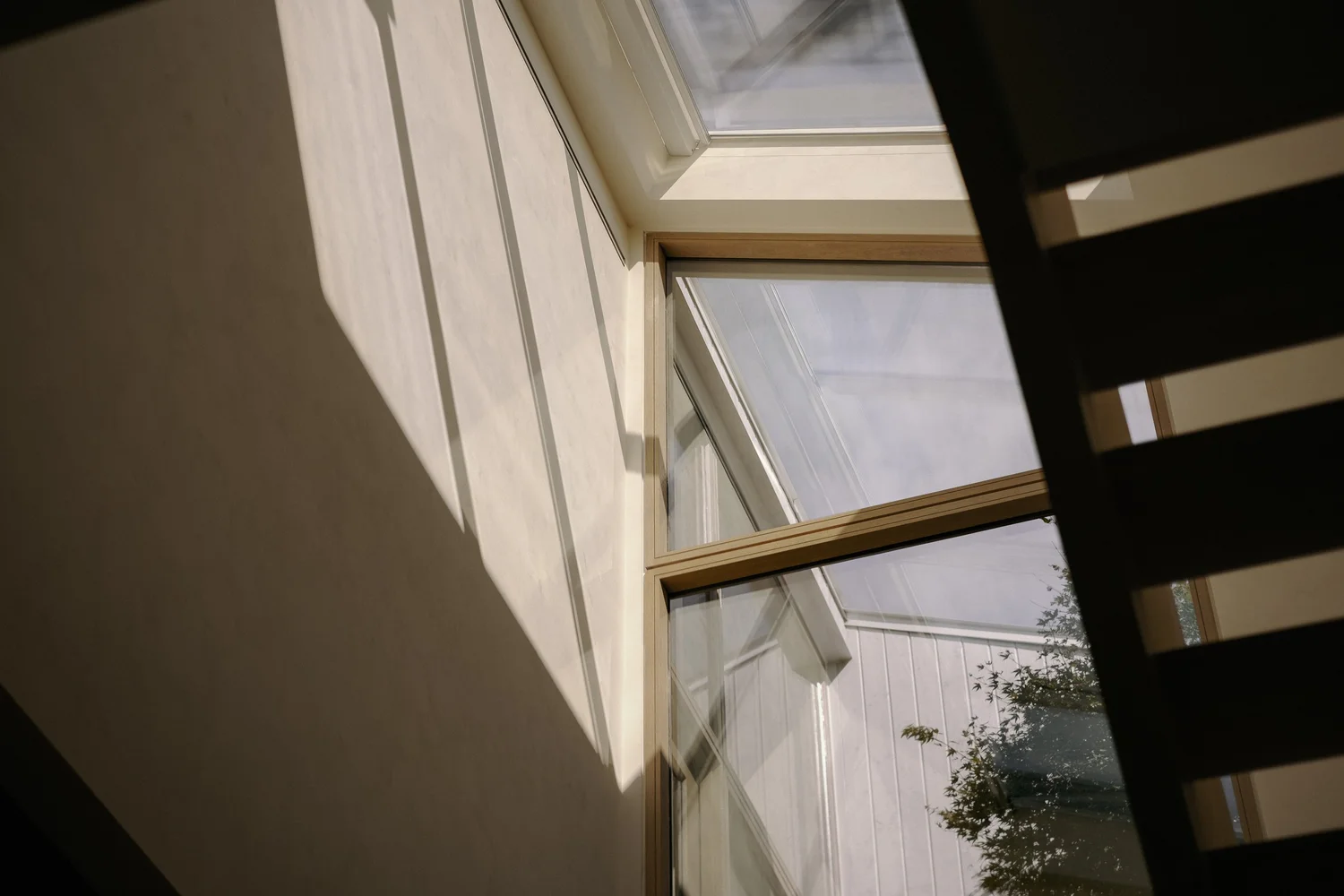
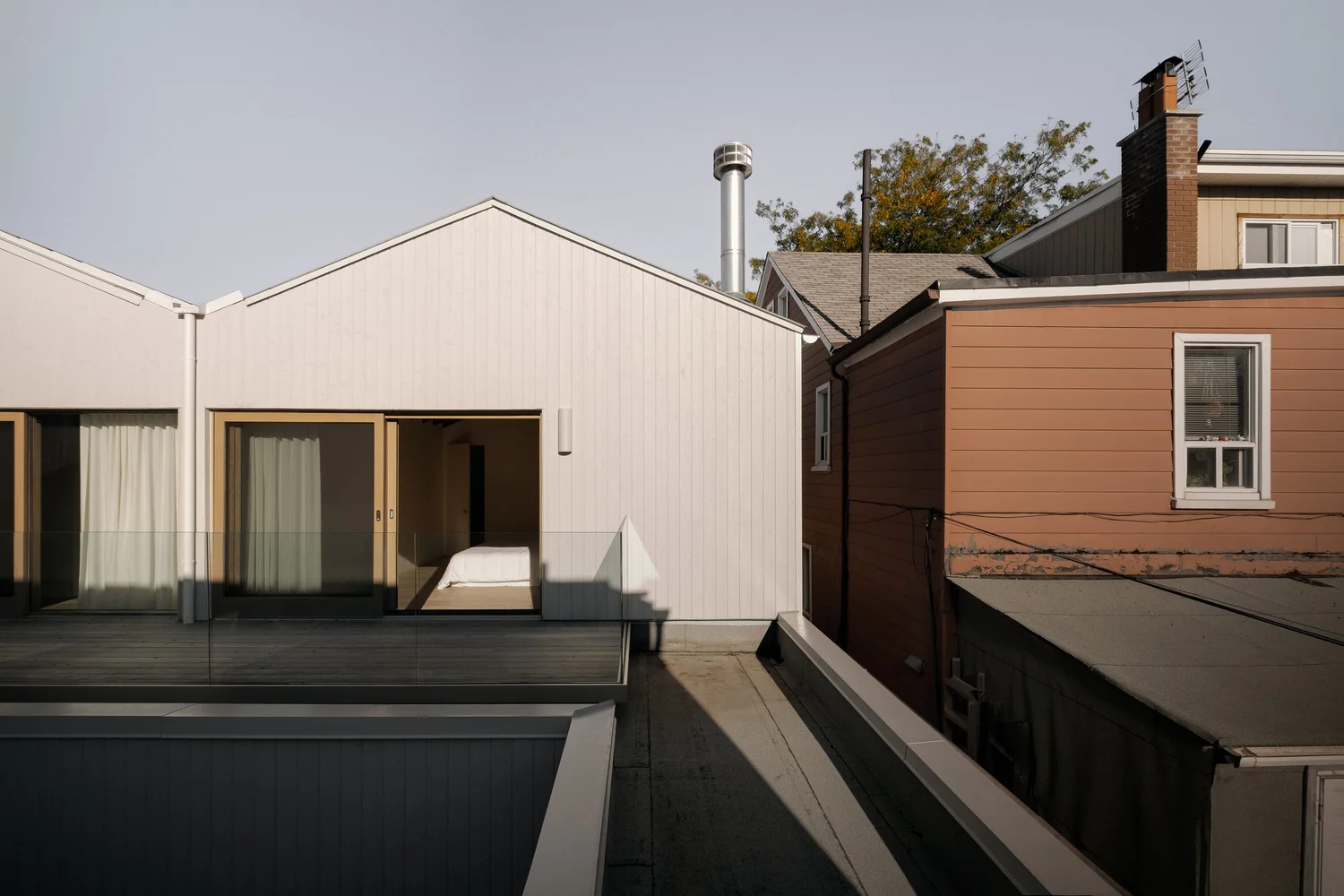
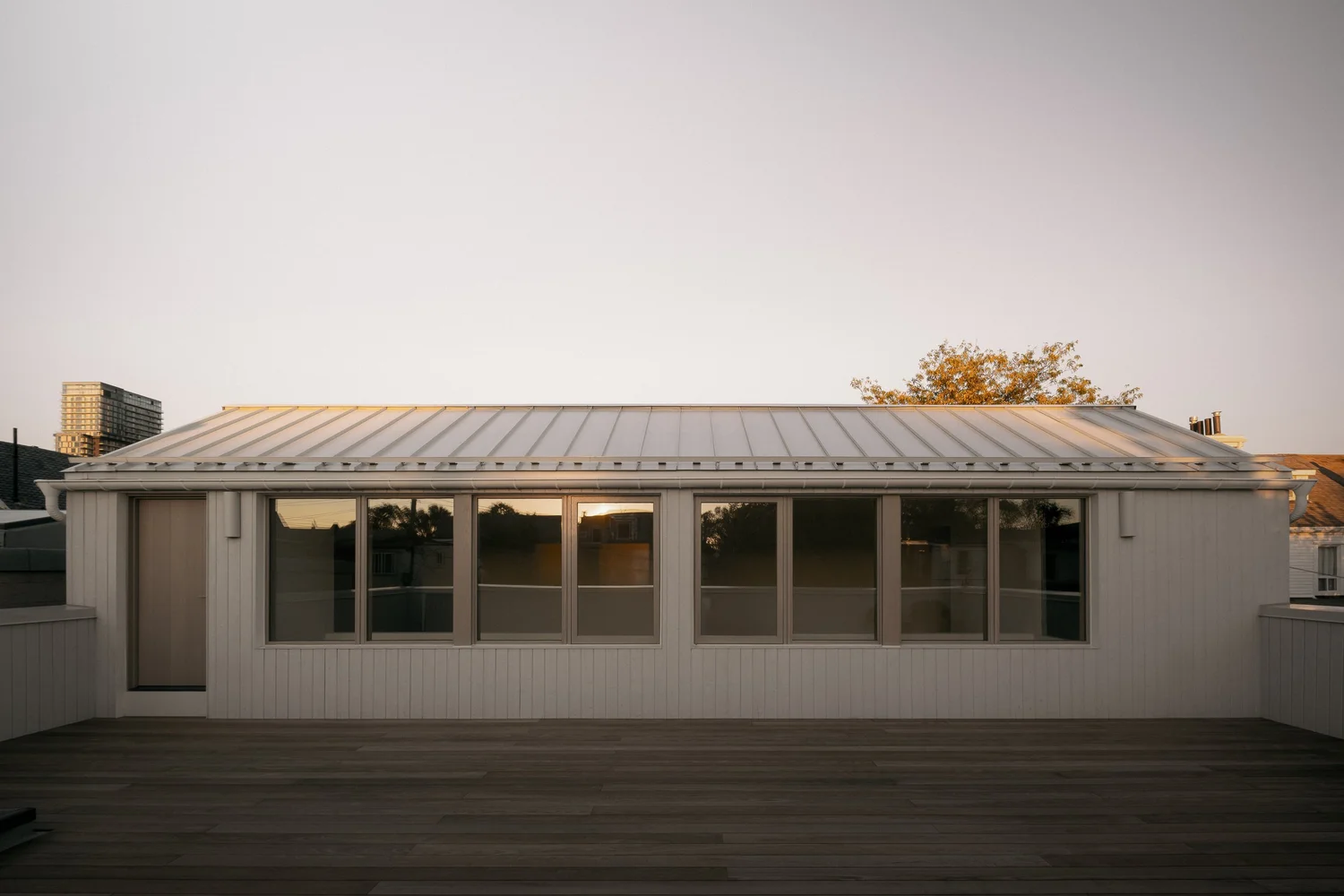
The upper level follows a more additive architectural strategy, where private bedroom volumes open onto terraces and shared outdoor areas. A double-height atrium near the entry, illuminated by skylights and large windows, visually connects the two floors and allows natural light to cascade through the interior. Within the courtyard, a Japanese maple tree serves both as a sculptural landscape element and as a natural privacy screen, reinforcing the project’s connection between architecture and nature.
Through careful adaptive reuse and spatial reorganization, Junction Semi House demonstrates how historic urban structures can be transformed into contemporary living environments without erasing their architectural memory. The project reflects StudioAC’s commitment to contextual design, material honesty, and the creation of spaces that support both communal life and individual privacy.